Author: Arcade Admin

  • Arcade Route Operator: What FEC Owners Need to Know

    Arcade Route Operator: What FEC Owners Need to Know

    Let’s get real for a minute. When you’re dropping quarters into a claw machine at your local bowling alley or challenging a buddy to Golden Tee at your neighborhood bar, chances are the gear you’re playing on isn’t owned by the venue. Nope, it’s owned by someone else — an arcade route operator. And if you’re an FEC owner, bar manager, or entrepreneur looking to add arcade games without blowing your budget, understanding this business model is a game-changer.

    Route operations might not grab the headlines, but they’re the unsung heroes keeping games spinning and cash flowing. Operators help their clients—venues like bars, FECs, and bowling alleys—enhance their entertainment offerings and boost customer engagement, all without the heavy upfront costs. Whether you want to build a side income or boost your venue’s vibe without the heavy upfront costs, this is the route to know.

    So, What’s an Arcade Route Operator, Exactly?

    Think of an arcade route operator as the behind-the-scenes pro who owns, operates, and manages coin- and card-operated arcade games placed in third-party spots — bars, FECs, bowling alleys, movie theater lobbies, laundromats, you name it. They handle everything: purchasing the machines, moving them around, installing, maintaining, collecting the cash, and swapping out titles when needed. The venue? They just provide the space and foot traffic.

    You might hear them called “street operators” — a nod to the old-school days when operators drove around emptying coin boxes at local joints. The term stuck, even as the business got smarter with card systems and cloud-based tracking.

    Here’s the money part: revenue sharing. Usually, it’s a 50/50 split between operator and venue, but it’s flexible. For example, assume the operator invests heavily in new machines; they might negotiate a 60/40 split in their favor to recoup costs faster. Sometimes operators get a bigger cut if they’re dropping serious coin on equipment; other times, the venue gets more if they’re pitching in marketing or staffing. Negotiating revenue-sharing contracts with venue owners is a crucial part of becoming an operator, as these agreements determine profitability and long-term success. Unlike FECs that own their machines outright and take all the risk, working with route operators means sharing profits but cutting upfront costs and headaches.

    Many FECs mix it up — owning their main attractions but partnering with route operators for the arcade games. This way, they get the best of both worlds: focus on their core business while the arcade experts handle game selection, upkeep, and rotation.

    From where we sit, route operations are a crucial link in the arcade tech ecosystem. Operators sync with card systems, payment platforms, and management software venues already use. Knowing how this all fits together helps both sides make smarter, more profitable decisions.

    Claw machines in a location.

    Breaking Down the Revenue-Share Model

    This model is the heart of route operations. The operator owns and services the games; the location provides space, utilities, and customers. When the cash or card payments roll in, it gets split per the contract.

    Picture this: a route operator places two machines in a local bar — a Golden Tee cabinet and a dart machine. Together, they pull in $160 a week. Split 50/50, the bar makes $80 without spending a dime on gear, and the operator pockets $80 to cover costs and profit. Multiply that across multiple locations, and you’ve got a sustainable business.

    Bigger setups work the same way but with adjusted numbers. A 20-game arcade inside a bowling alley might rake in $3,000 monthly. At a 60/40 split favoring the operator, the bowling alley nets $1,200, and the operator takes $1,800 — fair compensation for the bigger investment and service load.

    Splits vary based on the venue and negotiation. Small bars usually go 50/50 since the operator’s workload is lighter and foot traffic steady. For larger FECs or high-value redemption games, splits might shift to 60/40 or even 65/35 in the operator’s favor. If the venue pitches in marketing or has prime floor space, they might demand a bigger piece.

    Tracking revenue depends on tech. Old-school coin machines mean operators physically collect cash and count coins. Bill acceptors add complexity. Modern card systems like Intercard, Embed, Sacoa, or Semnox generate digital reports accessible to both parties, making splits transparent and disputes rare. Revenue collection also includes maintaining records of machine performance, earnings, and repairs, which is essential for both transparency and long-term profitability.

    Payment schedules vary. Some operators settle weekly, handing over cash or checks during visits. Others settle monthly, especially with card systems that aggregate revenue electronically. The rise of cashless play means settlements are cleaner and more transparent — venues can log in and see exactly what each game earned. Missing a scheduled collection can cause the venue to doubt the operator’s commitment and reliability, which can damage trust and the long-term relationship.

    What Does an Arcade Route Operator Actually Do?

    Running a route is more than just collecting quarters. It’s a full-on operation.

    Collections are the daily grind. Operators visit locations regularly — often weekly — to empty coin boxes or check card system reports, restock prizes in redemption games, clean machines, and ensure everything’s working. Miss a run, and you miss income — plus, the venue might start doubting your commitment.

    Maintenance is mission-critical. Operators juggle preventative upkeep — swapping worn parts before they break — and reactive fixes when machines go haywire. Regular maintenance, including cleaning and simple repairs, prevents loss of revenue and keeps machines running smoothly. Cleaning arcade machines regularly can help prevent breakdowns and ensures a better experience for players. Personally, I’ve found that supporting your machines through consistent upkeep is the best way to avoid costly downtime and unhappy customers. Operators must be prepared for service calls and maintenance issues at any time, as a crane game stuck on a Friday night is a call you don’t want to miss. Smart operators keep spare parts and swap kits handy to fix things on-site fast, minimizing downtime. It’s wrong to assume that machines will run themselves without attention—neglecting maintenance can quickly eat into profits and damage your reputation. Operators should regularly check the earnings and performance of their machines to make informed decisions about maintenance and replacement. Route operators need mechanical aptitude, strong customer service skills, and proficiency with electronic tools to diagnose and fix machines. Maximizing machine uptime through technical repairs and optimizing the game mix is key to profit, but the time commitment involved in maintaining machines is significant and should not be underestimated.

    Game selection and rotation make or break profits. Bar crowds love competitive games like Golden Tee, Big Buck, or boxing machines. FEC visitors skew toward redemption games, kid-friendly titles, and prize cranes. Operators track performance data, swapping out underperformers every 2-4 months and moving winners to the right spots.

    Back-office work is no joke. Licensing varies by city and state — some places require permits for each machine, others for the business. Insurance is non-negotiable, protecting against injuries, theft, or damage. Operators need to keep in their head the importance of safety and legal preparedness, especially when dealing with equipment like pinball machines. Bookkeeping tracks income, expenses, and taxes for each location. Operators should also have skills in cash handling, accounting, and analyzing game performance data.

    Relationship management ties it all together. Operators who just show up to collect cash and vanish don’t last. The best operators visit regularly, chat with venue managers, and adjust the game mix based on feedback. Bar owners asking for pinball? Operators find a way to deliver. FEC managers noticing kids ignoring a game? Operators swap it out. These conversations build trust, better contracts, and referrals.

    Where Do Route Operators Place Their Machines?

    Route operators spread their games across tons of venues — each with its own vibe and earning potential.

    Classic “street” spots include bars, pubs, bowling alleys, truck stops, laundromats, convenience stores, and VFW halls. These places have waiting or socializing customers — perfect for arcade play. Think truckers between loads, bowlers between frames, bar patrons between drinks. Placing arcade machines in waiting areas can enhance the customer experience and maximize engagement while people relax or wait.

    Family entertainment centers are a big deal here. Many start small, lacking the cash to buy a full game room. A route operator partnership lets them offer arcade fun without the capital hit. As the FEC grows, it might buy equipment outright, but the route model is a low-risk stepping stone.

    Hybrid models are trending. FECs own laser tag, VR, climbing walls, but outsource arcade and redemption games. This division plays to strengths — operators bring arcade know-how, distributors, and performance tracking.

    Operators pick locations based on foot traffic and dwell time. Parents waiting during birthday parties are captive customers. League bowlers who hang for hours play more than quick-stoppers. Demographics matter — 21+ bars want pinball and sports sims; FECs want redemption and kid-friendly games. Crane machines are especially versatile, fitting easily into various waiting areas and offering plush toys or branded items as prizes. The Kiki Arcade line is a great example, providing kid-sized game cabinets that can be customized for amusement-only play or ticket redemption.

    Examples? A 10-game arcade cluster at a 12-lane bowling center mixing video and redemption games. A Dallas bar with a jukebox, electronic darts, and Golden Tee. A regional FEC adding a crane game and kids’ video piece to its lobby for families checking in.

    Micro-locations are rising — hotel lobbies, trampoline parks, indoor playgrounds, even medical waiting rooms. Operators focus on compact, low-maintenance games that fit small spaces and earn with minimal supervision.

    Financing and Investment: What You Need to Know

    Let’s face it—jumping into the arcade route business isn’t just about finding the right location or picking the hottest new games. It’s about making smart financial moves that set you up for long-term success. Whether you’re a seasoned operator looking to expand your route or a newcomer eyeing your first machine, understanding the investment landscape is absolutely key.

    Upfront Costs and Ongoing Expenses

    First, let’s talk numbers. Arcade games aren’t cheap—expect to pay anywhere from $9,000 to $20,000+ for a single new machine, with classics like pinball or redemption games often landing at the higher end. But the investment doesn’t stop there. You’ll need to budget for transportation, installation, insurance, licenses, and regular maintenance. Don’t forget about prize inventory if you’re running claw machines or redemption games. These costs add up fast, so having a clear picture of your total investment is crucial before you place your first order.

    Financing Your Arcade Route

    Most operators don’t have piles of cash lying around to buy a full game room outright. That’s where financing options come in. Equipment financing and leasing are popular in the arcade industry, letting you spread out payments over time and preserve cash flow for other business needs. Some banks and specialty lenders offer loans tailored to amusement equipment, but be sure to compare rates and terms. Leasing can be a smart move if you want to keep your lineup fresh and avoid being stuck with outdated machines. Of course, using personal savings or reinvesting profits from your existing business is always an option if you want to avoid debt.

    Revenue, ROI, and Scaling Up

    Before you sign on the dotted line, run the numbers. Estimate your expected weekly revenue per machine based on location type—bars, FECs, and movie theaters all have different earning profiles. Calculate how long it will take to recoup your investment and start turning a profit. Remember, the arcade route business is a marathon, not a sprint. It might take months or even years for a new game to pay for itself, especially if you’re splitting revenue with the venue. That’s why tracking performance and being ready to rotate out underperforming games is so important.

    Managing Risk and Protecting Your Investment

    Every operator faces ups and downs—slow weeks, broken machines, or unexpected service calls can eat into your bottom line. That’s why having solid insurance coverage and a financial cushion is non-negotiable. Make sure you’re up to date on all local licenses and taxes to avoid costly fines. And always set aside funds for repairs and upgrades, so you’re not caught off guard when a machine goes down.

    Smart Strategies for Growth

    The most successful operators don’t try to do it all at once. Start with a handful of machines in locations where you have strong relationships, then reinvest your profits to add games or expand to new locations. Use data from your card systems and management software to guide your decisions—double down on what’s working, and don’t be afraid to pull the plug on games that aren’t earning their keep. As your route grows, consider partnering with other businesses or exploring new financing options to keep your momentum going.

    Bottom line: the arcade route industry rewards operators who plan ahead, manage their money wisely, and stay flexible. With the right investment strategy, you can build a profitable business that brings fun—and revenue—to every location you serve.

    Technology and Software: The Secret Sauce

    Today’s route operators lean hard on tech.

    Cloud dashboards give real-time earnings per game and location. Operators no longer wait for collections to know what’s working. They spot machines that stopped earning and fix issues before the next visit.

    Card systems create opportunities — but also complexity. Route games must integrate with venue card systems, requiring coordination and ongoing compatibility checks. Operators who nail this integration bring major value.

    Payment processing adds another layer. Card readers accept credit, tap-to-pay, and mobile wallets, but the money flows through gateways before hitting the operator. Setting up settlement flows correctly is crucial to avoid headaches and keep venue relationships strong.

    Telemetry and remote monitoring cut down truck rolls. Machines can report coin drops, door opens, and error codes via cellular or WiFi. An operator managing multiple locations can prioritize service calls based on real data, not guesswork.

    AI and automation are the future. Operators use data to forecast which games underperform, suggest rotations, and automate reports for venue managers. Integrations with CRM systems track location satisfaction, correlating game performance with relationship health.

    These tools let operators scale efficiently. Managing 50 locations with modern tech takes less effort than 20 locations did a decade ago.
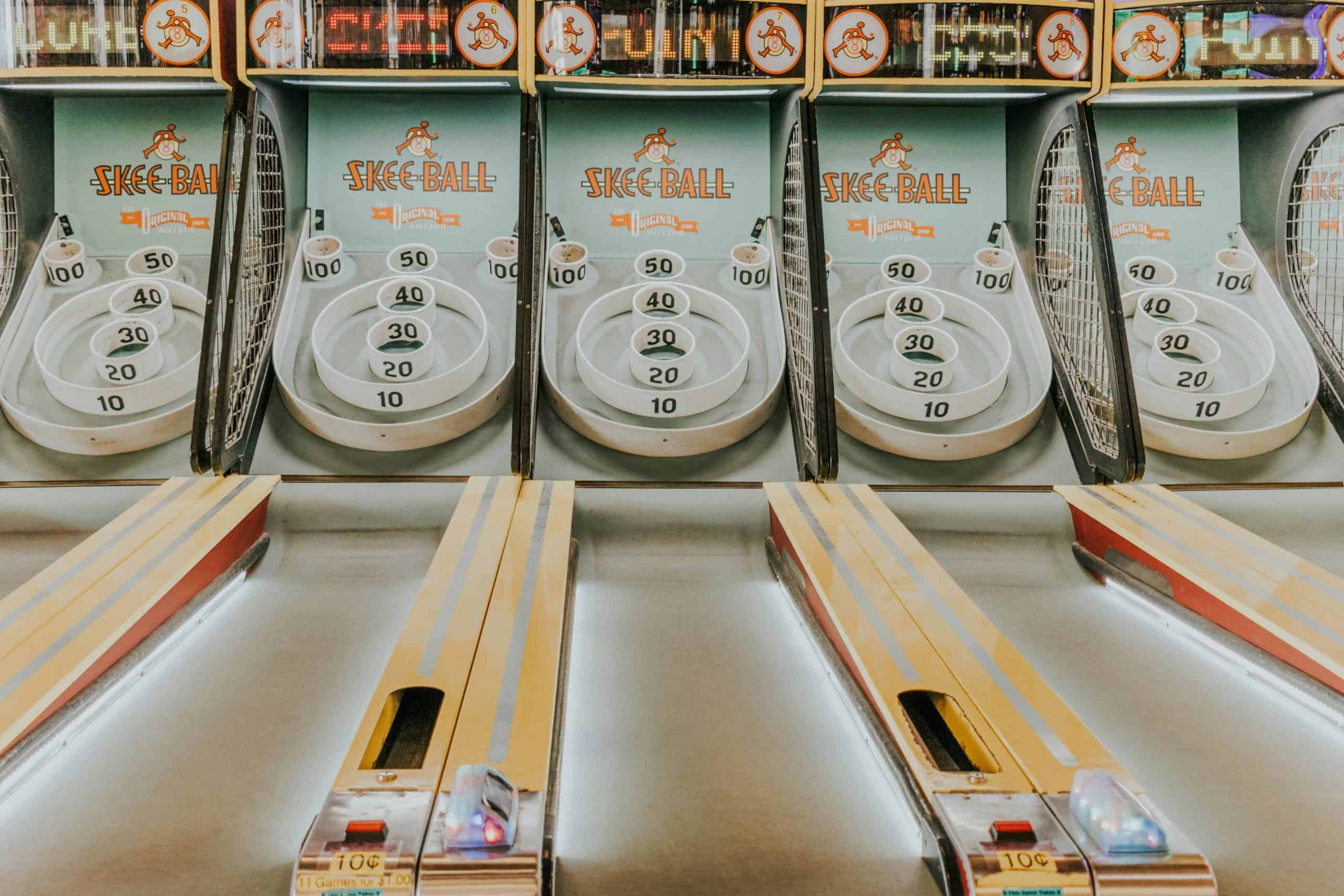
    An arcade route operator would go to this location to see the performance of skee ball.

    The Hard Truth: Challenges for Route Operators

    Route operations aren’t a walk in the park. There are alot of significant costs and challenges involved, and most operators do not make a full living from route operations—it’s often more about passion than profit. If you’re wondering about the financial realities, the average earnings for an arcade machine can be around $20 per week, or $1,040 per year. With a new arcade machine costing around $6,000, you may need 8,000 plays at 75 cents each just to break even. Operating an arcade machine also involves costs such as insurance, taxes, and maintenance, which can significantly reduce profits. Street and route operations are often overlooked in the arcade and amusement business despite their significant presence.

    First up: the money. New arcade games cost $9,000 to $20,000+ each. Even proven hits like Golden Tee or Big Buck Reloaded are pricey. Redemption games add prize inventory costs. Financing eats margins; paying cash ties up capital. ROI can stretch years if a game pulls $40 a week, and in the past, operators have learned that previous earnings and costs heavily influence future decisions.

    Then there’s the environment. Bars with smoke, unsupervised lobbies, or kids climbing on machines lead to more breakdowns. Vandalism, theft, and coinbox tampering are real threats. Reinforced hardware helps but adds cost.

    Regulations vary wildly. Some cities require annual permits and inspections per machine; others classify games as gambling, needing special licenses. Operators must deal with local city taxes as part of running a coin-op business. You can run a game without insurance, but the first time someone gets hurt by your machine, you will lose all of your life’s savings just defending yourself in court. You might be allowed to buy it back at auction if it’s confiscated, but some states forbid it. You should check with local distributors—they can put you in touch with AMOA or state associations that might be a good source of info. You will take the hit for it if your machine catches fire and burns down the place. You can run a game without a license, but when the city or state confiscates it, you NEVER get it back.

    Competition is fierce. Venues sometimes buy their own games, cutting out operators. Manufacturers sell direct. Labor shortages make hiring techs and collectors tough. Inflation drives up fuel, parts, and insurance costs.

    Tech adoption is tricky. Legacy routes still run on cash, leaving operators blind between visits. Consolidating data from multiple systems demands skills not every operator has. Modernizing pays off but strains resources upfront.

    Why Partner With a Route Operator? (For FECs & Venues)

    Despite the headaches, the route model offers serious perks.

    Upfront cost? Way lower. Instead of dropping $100,000+ on a game room, venues get equipment with zero capital outlay. That frees cash for other investments.

    Curated game mixes matter. Operators know what works where. They’ve tested dozens of games across hundreds of spots. FEC owners focused on laser tag and birthday parties might not have this expertise — operators bring it.

    Shared risk protects venues. Buy a $15,000 game that flops? That’s a sunk cost. Route operators swap underperformers, so venues aren’t stuck with dead weight.

    Service and expertise reduce headaches. Operators handle maintenance, repairs, and supplier relationships. FECs trying to DIY arcade upkeep often find it’s more work and cost than expected.

    Data integration is a bonus. Operators plug route data into venue dashboards and loyalty programs, simplifying accounting and marketing.

    Flexibility is key. Start small with a few games, test demand, then negotiate purchases, expansions, or co-ownership. The route relationship can evolve as the business grows.

    Ready to Jump In? Starting Your Arcade Route Operator Journey

    If you’re thinking about starting a route, here’s the real talk.

    Average weekly earnings per machine are modest. Small bars and laundromats might pull $20 to $60 per week, and the average earnings for a pinball machine can vary significantly based on location and player interest. It’s income, not a jackpot. Success means scaling slowly — an arcade route operator typically starts with 1–2 machines and expands by reinvesting profits. Add machines and locations over years, not overnight.

    Becoming an arcade route operator involves acquiring equipment and securing high-traffic locations. Start small: two to ten machines in local venues where you have relationships. Track earnings for 6-12 months before expanding. Learn what works in your market.

    Pick engaged venues. A bar owner who loves arcade games and promotes them will crush it compared to one who just tolerates your machines.

    When setting up machines for new locations, consider configuring them for free play mode as part of the setup process, especially when customizing or pre-configuring pinball machines before shipping or placement.

    Some essential and popular games for route operators include Big Buck Reloaded and Golden Tee PGA Tour, which perform well in various locations. The World’s Fastest Drummer features a compact footprint, making it suitable for small locations, while Andamiro’s Basketball Pro is a self-contained basketball game that can be set up in various venues.

    Get your legal ducks in a row. Register your business, research licenses, get liability and property insurance. These aren’t optional — they protect your investment and sanity.

    Budget beyond machines. Factor in parts, repairs, transport, and slow periods. Financing options exist but eat into thin margins.

    Build systems early. Schedule collections and maintenance. Define service call response times. Track performance by title and location. These habits scale.

    Embrace software. Start simple with spreadsheets or basic tools, then upgrade to integrated platforms with remote monitoring and analytics.

    We keep an eye on the latest software, card systems, and integrations to help operators and venue owners stay ahead.

    Bottom line: understand the economics, build strong relationships, leverage tech, and keep expectations realistic. The route business rewards patience, discipline, and a genuine passion for keeping customers entertained.

    Ready to make your move? The arcade route operator world is waiting. Let’s get to work.
  • The Family Entertainment Center Industry: Market Insights and Innovations

    The Family Entertainment Center Industry: Market Insights and Innovations

    The family entertainment center industry has evolved dramatically from the modest arcades and outdoor mini-golf courses of the 1980s into today’s expansive, multi-attraction destinations that serve entire communities. What began as simple entertainment venues has transformed into a sophisticated sector combining technology, hospitality, and immersive experiences under one roof.

    The global market demonstrates robust expansion, valued at approximately USD 28.2 billion in 2023 with projections showing a compound annual growth rate exceeding 10.5% through 2032. In the United States specifically, the arcade, food, and entertainment complexes segment reaches $6.0 billion in 2026, reflecting strong domestic demand for out-of-home family experiences.

    Introduction to the Family Entertainment Center (FEC) Industry

    A family entertainment center—sometimes called a family fun center or location-based entertainment venue—refers to for-profit leisure facilities designed to provide multi-generational entertainment. These venues typically range from 10,000 square feet indoor children’s play centers to expansive outdoor fun centers combining arcade games, rides, virtual reality experiences, food and beverage services, and merchandise sales.

    The appeal is straightforward: families seeking immersive, all-in-one outing options can access multiple attractions without traveling between locations. Many parents visit FECs three to five times per year, making repeat visits, memberships, and birthday parties essential revenue drivers for operators.

    Key industry definitions and data points:

    • Family entertainment centers serve ages from toddlers through seniors, with the up-to-12 age group representing the largest family segment
    • North America commands approximately 40% of global market share, driven by rising incomes and family-oriented leisure spending
    • The entertainment industry continues shifting toward experiential spending over material goods, particularly among young adults aged 20-35
    • Revenue streams typically include tickets and admissions, food and beverage, arcade play, party packages, and merchandise
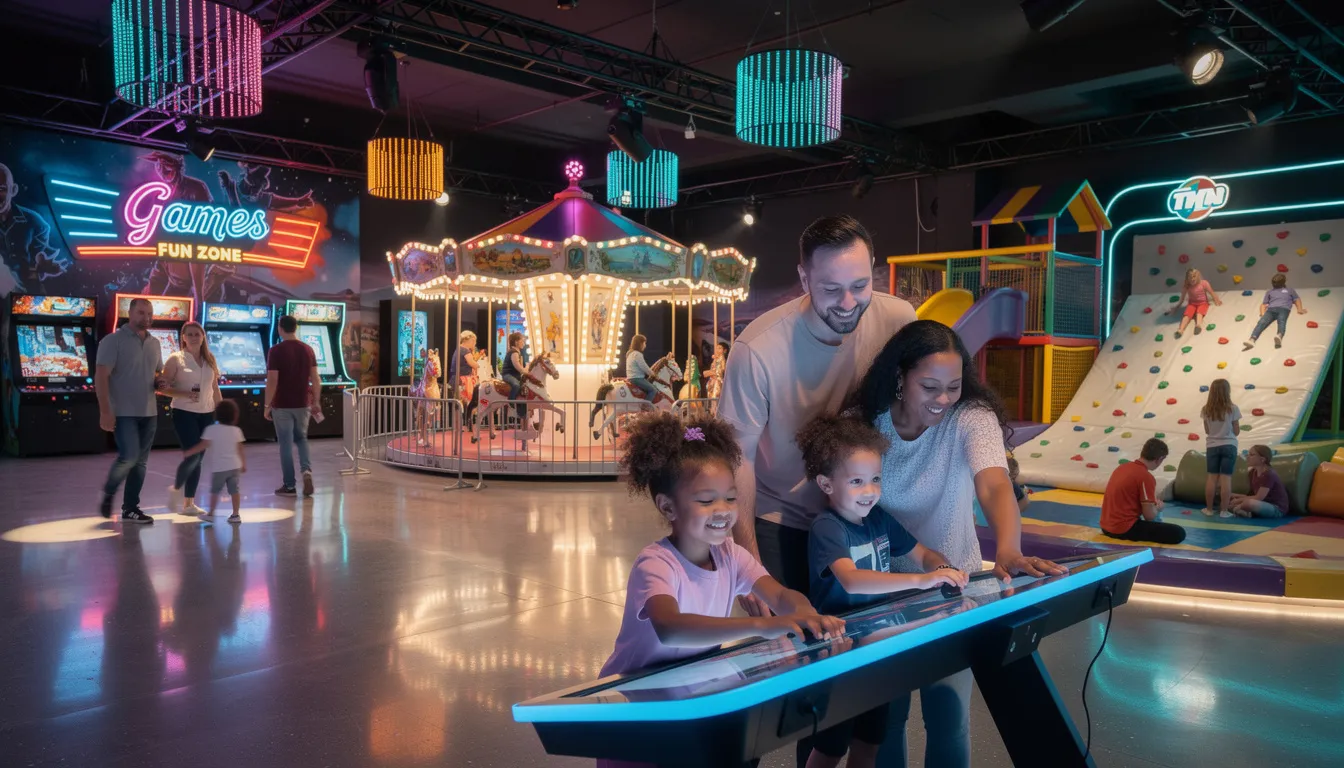
    (AI Generated) Families enjoying a vibrant indoor entertainment center filled with colorful lighting and various attractions, such as bowling alleys and arcade games, creating memorable experiences for guests of all ages. Children and parents engage in fun activities together, showcasing the excitement and community spirit typical of a family fun center.

    Overview of the Family Entertainment Center Industry

    The family entertainment center business thrives on several economic drivers that show no signs of slowing. Rising demand for out-of-home experiences, the “experience over things” spending trend, and parents seeking active alternatives to screen time all fuel growth.

    The industry demonstrated notable expansion after 2015, particularly with the trampoline park boom, and showed resilience post-2020 as families returned eagerly to out-of-home entertainment. Urbanization, higher disposable incomes, and technological integrations continue pushing the market forward.

    Industry fundamentals for 2024-2025:

    • Primary revenue mix includes attractions and admissions, arcade and redemption games, food and beverage operations, birthday parties and group events, memberships, and corporate events
    • Major industry associations including IAAPA provide training, safety standards, trade shows, and benchmarking resources for operators
    • Consumer preferences increasingly favor immersive theming and innovative attractions over basic, undifferentiated offerings
    • Cashless payment systems and dynamic pricing have become standard operational tools
    • Data-driven decision making helps operators optimize operations and maximize per-capita spending
    • The market remains fragmented, with major players like Dave & Buster’s and Legoland Discovery Centers holding roughly 8% combined share
    • Industry trends point toward multi-faceted venues serving all ages rather than single-demographic targeting

    Eight (8) Types of Family Entertainment Centers

    Family entertainment centers span a wide spectrum—from single-attraction venues to massive multi-entertainment complexes, from indoor-only facilities to hybrid indoor-outdoor destinations. Successful operators often combine several attraction categories to create unique offerings that drive repeat visits and capture diverse revenue streams.

    Modern FECs position themselves as destinations where the whole family can find something engaging, regardless of age or interest. Understanding the distinct types helps aspiring operators identify market gaps and match concepts to local demand.

    Multi-Entertainment Spaces

    Multi-entertainment spaces represent the flagship FEC model, combining multiple anchor activities within large facilities typically spanning 25,000 to 80,000+ square feet.

    • Typical attraction mixes include bowling alleys, laser tag arenas, ropes courses, mini golf, bumper cars, VR zones, full arcades, escape rooms, and dedicated event rooms
    • These venues serve broad demographics: families with children on weekends, teens seeking fun with friends, young adults on date nights, and corporate groups booking team-building or holiday parties
    • Revenue diversity through attractions, food and beverage, parties, walk-in play, group events, and memberships helps smooth seasonality challenges
    • Operational complexity requires careful zoning for different noise levels, extensive staff cross-training, and robust management software to coordinate bookings and capacity
    • Many new investors pursue this model because it maximizes market capture across multiple guest segments
    • The challenge lies in executing multiple attractions well rather than doing many things poorly

    Eatertainment Concepts

    Modern FECs are evolving into “eatertainment” venues, combining food, beverage, and retail to increase customer dwell time.

    • Common attraction pairings include bowling plus arcade, social darts with games, boutique mini golf with craft cocktails, or hybrid restaurants with small ropes courses or VR zones
    • Per-cap spending on food and beverage can reach 30-40% of total revenue, especially during evenings targeting adults
    • These venues typically position as family-friendly by day and adult-focused in evenings, with leagues, corporate events, and buyouts driving weeknight business
    • Kitchen size, service speed, and beverage options directly impact profitability
    • Liquor licensing requirements and staff training for responsible service add operational layers
    • The eatertainment model has gained momentum since the mid-2010s as operators recognized the margin potential of integrating quality dining with entertainment

    The future of FECs lies in creating “smart,” hybrid venues that cater to diverse age groups, offering a blend of physical, social, and digital experiences.

    Mini Golf and Putt-Putt Centers

    Mini golf and putt-putt centers range from traditional outdoor 18-36 hole courses to modern indoor venues featuring blacklight environments and projection-mapped immersive experiences.

    • Appeal spans a wide age range, making these venues suitable for birthday parties, date nights, casual family outings, and corporate events
    • Outdoor courses face seasonality challenges in many regions, while indoor attractions offer year-round revenue potential
    • Typical price points for a round range from $8-15 for basic courses to $15-25 for premium themed experiences
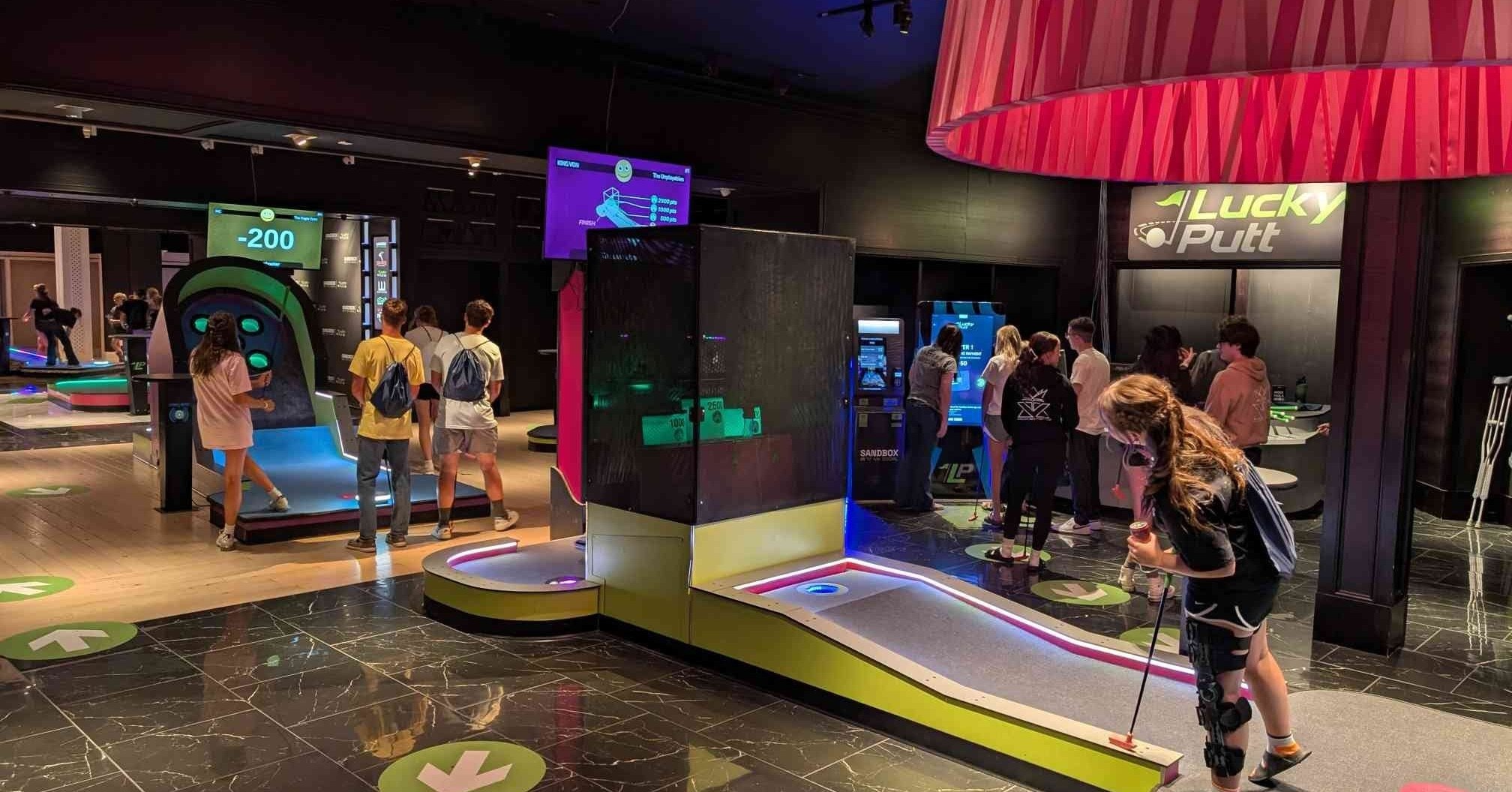
    • Leading edge mini golf includes concepts like PuttShack and Lucky Putt which automatically keeps track of your score and remembers your game history.
    • Upsell opportunities include snack bars, small arcades, party rooms, and bundled ticketing with adjacent attractions
    • Footprint requirements vary significantly—outdoor courses need substantial land while indoor venues can operate in 8,000-15,000 square feet
    • Theming quality increasingly differentiates venues, with elaborate themed environments commanding premium pricing

    Arcades and Redemption Centers

    Modern arcades operate as cashless, card-based game rooms featuring video games, attractions, and redemption games where guests earn tickets or points for prizes.

    • Redemption games drive repeat play and higher per-visit spending, particularly among children and tweens who engage with the prize-earning mechanic
    • Key metrics include average game time, swipes per visit, and prize markup strategies that balance guest satisfaction with profitability
    • Layout matters significantly—placing high-earning games prominently and ensuring redemption counter visibility influences spending patterns
    • Regular game mix refreshes maintain guest interest and drive repeat visits
    • Arcades frequently anchor other FEC types (bowling centers, trampoline parks, kids’ play zones) rather than operating standalone
    • Integration with management software enables tracking of game performance, identifying underperformers, and optimizing floor layout
    Players enjoying Lucky Putt at a Family Entertainment Center

    Bowling-Anchored Family Entertainment Centers

    Traditional bowling alleys have evolved into hybrid bowling entertainment centers featuring upscale food, lounges, and substantial arcades alongside lanes.

    • Lane formats include standard layouts and boutique concepts with fewer lanes but higher per-lane revenue through premium experiences
    • Revenue balance between league play (consistent weeknight income) and open-play/party bookings (higher per-cap weekends) requires careful scheduling
    • Demographic reach spans families on weekends, league bowlers on weeknights, young adults in evenings, and corporate groups year-round
    • Capital intensity remains high—lanes, scoring systems, seating, and ongoing maintenance represent significant investment
    • Maximizing non-lane revenue per guest through arcade play, food and beverage, and party upgrades drives overall profitability
    • Bowling increasingly serves as one anchor among several attractions rather than the sole focus

    Kids’ Play Zones and Indoor Playgrounds

    Kids’ play zones focus primarily on children under 12, featuring soft play structures, slides, ball pits, obstacle zones, and dedicated toddler areas.

    • Common visit occasions include weekday playdates, weekend family outings, birthday parties, and school or childcare field trips
    • Design considerations prioritize clear sightlines for parents, separated toddler zones, organized shoe storage, and comfortable seating with Wi-Fi and coffee for caregivers
    • Revenue streams typically include time-based play sessions, monthly memberships, birthday party packages, and café sales
    • Safety and cleanliness expectations run exceptionally high—daily sanitization protocols and regular equipment inspections directly impact parental trust
    • Typical facilities range from 6,000-15,000 square feet with play structures reaching 15-25 feet in height
    • Entry pricing commonly falls between $12-25 per child for 2-3 hour sessions, with membership programs offering significant discounts for frequent visitors

    Trampoline and Adventure Parks

    Trampoline parks emerged as a dominant FEC category around 2010-2012, featuring large indoor spaces with interconnected trampolines and specialized zones for dodgeball, slam-dunk basketball, foam pits, and performance trampolines.

    • Many facilities have expanded into “adventure parks” combining trampolines with ninja courses, climbing walls, ropes courses, zip lines, and air tracks
    • Strong appeal to older children, teens, and young adults differentiates these venues from traditional kids’ play zones
    • Birthday parties and group events drive significant revenue, often accounting for 30-40% of business
    • Safety emphasis runs exceptionally high—trained court monitors, comprehensive waiver systems, mandatory grip socks, and adherence to evolving ASTM standards
    • Robust software manages digital waivers, capacity control, and timed sessions to handle peak demand without overcrowding
    • Operational intensity requires significant staffing during peak hours and continuous safety monitoring throughout operating hours

    Laser Tag, VR, and Specialty Attractions

    Laser tag arenas and VR attractions represent mid- to high-tech experiences that operate standalone or within multi-attraction FECs.

    • Laser tag arena design features maze-like layouts, multi-level platforms, base targets, scoring systems, and dedicated briefing and vesting rooms
    • VR offerings range from free-roam arenas to simulator pods and mixed-reality games, drawing teens and adults seeking novel experiences
    • Throughput considerations—players per session, session length, equipment turnaround—directly impact revenue potential
    • These attractions pair well with arcades and party rooms, creating natural upsell opportunities
    • Session pricing typically ranges from $8-15 for laser tag to $15-30 for premium VR experiences
    • Party and event packages combining these attractions with food and exclusive access command premium pricing

    What to Know Before Starting a Family Entertainment Center

    Starting a family entertainment center means entering both the real estate business and the hospitality operations business simultaneously. Success requires careful planning well before construction begins, with realistic expectations about timelines, capital requirements, and competitive positioning.

    Aspiring operators should expect 18-36 months from initial concept to grand opening, with cost drivers including build-out, attraction installation, technology systems, and working capital to sustain operations through the ramp-up period.

    Research is essential when starting a family entertainment center, including identifying the target audience and analyzing their interests.

    Establishing a unique selling point helps differentiate a family entertainment center from competitors.

    Critical planning factors:

    • Comprehensive market research identifying local demand and competitive gaps
    • Attraction mix selection matching community demographics and consumer preferences
    • Site selection balancing visibility, access, and facility requirements
    • Capital requirements often ranging from $1 million for small scale kids’ play zones to $5-10 million+ for multi-entertainment spaces
    • Clear value proposition explaining why families will choose your venue over existing options
    • Risk tolerance and contingency planning for the inevitable challenges of new business launch

    Market Research and Concept Definition

    Thorough market research separates successful FEC launches from costly failures.

    • Analyze local demographics within a 15-30 minute drive radius, examining population density, median household income, age distribution, and family household percentages
    • Visit every existing entertainment center, fun center, and competing venue within your target radius, cataloging their attractions, pricing, strengths, and weaknesses
    • Match concept type to identified gaps—if the market has multiple trampoline parks but lacks quality kids’ play zones, adjust accordingly
    • Utilize trade area studies, traffic counts, school district enrollment data, and local economic development reports
    • Survey parents and community groups directly through social media, school partnerships, or local parenting organizations
    • Census data, county planning documents, and chamber of commerce resources provide valuable market intelligence at no cost

    Site Selection and Facility Planning

    Location fundamentally impacts FEC success, requiring careful evaluation of multiple factors.

    • Prioritize strong visibility from major roads, easy access with minimal traffic friction, ample parking (typically 5-7 spaces per 1,000 square feet), and proximity to residential areas, schools, and retail
    • Size requirements vary by concept: 6,000-10,000 square feet for kids’ play zones, 15,000-25,000 square feet for trampoline parks, 25,000-40,000+ square feet for multi-attraction centers
    • Ceiling height requirements range from 16-20 feet for basic attractions to 24-30+ feet for trampolines, ropes courses, and climbing walls
    • Zoning verification should occur early—entertainment uses face restrictions in many areas
    • Efficient layouts ensure clear guest flow from entry through attractions, position party rooms near anchor attractions, and separate loud zones from quieter dining or toddler areas
    • Consider build-to-suit construction versus retrofitting existing buildings (former big-box retail spaces offer height and parking but may require significant investment in HVAC and structural modifications)
    Dave & Buster's family entertainment center


    Business Planning, Funding, and Financial Projections

    A robust business plan demonstrates viability to lenders and keeps operators focused on execution.

    • Essential plan components include executive summary, market analysis, attraction mix rationale, marketing strategy, operations plan, management team backgrounds, and detailed three-to-five-year financial projections
    • Capital budgeting should itemize construction and build-out, attraction equipment, technology systems (POS, cashless, online booking), initial inventory and supplies, pre-opening marketing, working capital, and 10-15% contingency
    • Common funding sources include personal equity and investment from friends and family, traditional bank loans, SBA loans for qualifying borrowers, private investors, and occasionally franchising or licensing arrangements
    • Financial projections should account for seasonality (summer and holiday peaks, January-February valleys), a 6-12 month ramp-up period after opening, membership revenue growth curves, and debt service coverage requirements
    • Realistic margin expectations range from 15-25% EBITDA for well-operated venues after stabilization
    • Include sensitivity analysis showing performance under optimistic, expected, and pessimistic scenarios

    Operations, Staffing, and Guest Experience

    Operational excellence determines whether a well-conceived FEC thrives or struggles.

    • Core roles include general manager, attraction leads, party hosts, front desk and cashiers, food service staff, maintenance technicians, and marketing coordinators
    • Training programs should address safety protocols, customer service standards, upselling techniques (party add-ons, food bundles, game card upgrades), and emergency procedures
    • Standard operating procedures for opening and closing, peak-time staffing, birthday party flows, and event management ensure consistency
    • Staffing ratios vary by attraction type—plan for 1 staff member per 15-25 guests in active attractions, with additional coverage for parties and events
    • Guest experience mapping from online booking through post-visit follow-up helps identify friction points and opportunities
    • Modern FEC management software integrates POS, digital waivers, online ticketing, party booking, and membership management into unified systems

    Safety, Risk Management, and Compliance

    Safety represents the non-negotiable foundation of FEC operations, directly impacting both guest welfare and business viability.

    • Daily inspection checklists for all attractions, equipment, and play areas should be documented and retained
    • Clear rules signage, safety briefings before activities, and active supervision create culture expectations
    • Insurance requirements typically include general liability ($1-2 million minimum), property coverage, workers’ compensation, and liquor liability for venues serving alcohol
    • Compliance obligations span local building and fire codes, health department requirements for food service, and applicable ASTM standards for attractions
    • Incident reporting protocols, crisis response plans, and staff communication procedures protect reputation and enable rapid response
    • Consistent safety culture becomes a marketing advantage—parents choose venues where they trust their children will be protected

    Revenue Streams, Technology, and Data in FECs

    Modern family entertainment centers rely on diversified revenue and integrated technology to maximize per-capita spending and drive repeat visits. Single revenue stream dependence creates vulnerability; successful operators build multiple income sources.

    Primary revenue categories:

    • Admissions and attraction access (often 40-50% of revenue)
    • Arcade and game play (15-25%)
    • Food and beverage (20-35%, higher in eatertainment concepts)
    • Birthday parties and group events (15-30%)
    • Memberships and passes (5-15%)
    • Retail and merchandise (2-5%)

    Technology integrations—cashless systems, online reservations, dynamic pricing, and unified management software—enables operators to track every transaction, understand guest behavior, and make data-driven decisions that improve profitability.

    Birthday Parties, Groups, and Memberships

    Birthday parties and group events often form 25-50% of revenue for FECs, representing the highest per-cap spending occasions.

    • Standard party packages include reserved room time, hosted activities, food and beverage, game cards or attraction access, and often a gift for the birthday child
    • Add-on options such as character appearances, premium attractions, extra guests, and enhanced decorations increase average party revenue
    • Group pricing for schools, sports teams, scouts, and corporate outings fills weekday capacity and creates community connections
    • Online booking tools prevent double-booking disasters and streamline the reservation process for both staff and guests
    • Membership and loyalty programs drive visit frequency—monthly passes, play memberships with discounted rates, and points-based rewards systems create ongoing relationships
    • Off-peak discounts for parties and groups help balance demand across the week

    Cashless Systems and Point-of-Sale Technology

    Card-based or RFID systems have become standard for managing arcade play, attraction access, and often food purchases within FECs.

    • Benefits include faster transactions, improved spending visibility for guests and operators, reduced cash shrinkage, and ability to run targeted promotions
    • Implementation typically requires 2-4 weeks of staff training and guest education during transition
    • Integrated gift card programs, mobile-friendly purchase options, and parent-controlled spending limits enhance the guest experience
    • POS integration connects front desk sales, arcade systems, food service, and online transactions into unified reporting
    • Kitchen display systems connected to POS improve food service speed and accuracy
    • Reporting dashboards provide real-time visibility into sales, capacity, and operational metrics

    Using Data for Decision-Making

    Successful FEC operators analyze data continuously to refine operations and maximize revenue.

    • Attraction and game performance metrics (plays per day, revenue per square foot, revenue per machine) identify opportunities to rotate underperformers
    • Guest segment tracking distinguishes member behavior from new guest patterns, party hosts from general admission visitors
    • Promotion effectiveness analysis reveals which marketing efforts actually drive incremental visits versus discounting existing demand
    • Labor-to-sales ratios and average transaction values guide staffing decisions and scheduling
    • Visitation frequency tracking identifies guests at risk of lapsing and triggers retention marketing
    • Practical applications include adjusting party time slots based on demand patterns, repositioning games based on performance data, and testing pricing changes in specific dayparts

    The family entertainment center industry continues expanding through the 2030s, driven by consumer demand for social, interactive, and technology-enhanced experiences. Post-2020, families demonstrated strong appetite for out-of-home entertainment, and operators who deliver memorable experiences are well-positioned to capture this demand.

    Major industry trends:

    • Immersive theming and photo-worthy environments designed for social media sharing
    • Hybrid indoor-outdoor spaces maximizing seasonal flexibility
    • Competitive socializing concepts targeting young adults
    • Integration of FECs into retail, dining, and mixed-use developments as traffic-driving anchors
    • Technology enhancement through apps, RFID wearables, and augmented reality elements
    • Increased focus on inclusive design serving guests of varying abilities
    • Data-driven personalization of marketing and guest experience

    Consumer behavior shifts are driving explosive growth in the family entertainment space, with parents visiting FECs three to five times a year.

    Innovation in Attractions and Experiences

    Innovation in attractions keeps offerings fresh and drives repeat visits from guests seeking new experiences.

    • Immersive art installations and experience rooms create shareable moments and justify premium pricing
    • Projection-mapped mini golf and interactive climbing walls blend physical activity with digital engagement
    • Hybrid physical-digital experiences using RFID bands and companion apps extend engagement beyond facility walls
    • Seasonal overlays, rotating pop-up attractions, and limited-time events create urgency and marketing opportunities
    • Motion-based attractions combining physical activity with gaming elements appeal to fitness-conscious consumers
    • Music and atmosphere programming adapted to different dayparts serves families by day and young adults in evenings

    Sustainability, Community, and Social Impact

    Modern FEC operators increasingly recognize their role as local community anchors beyond pure entertainment.

    • Sustainable operations through LED lighting, efficient HVAC systems, recycled materials, and responsible sourcing align with consumer values
    • Community engagement through fundraising nights, school partnerships, and team sponsorships builds local loyalty
    • Sensory-friendly hours for guests with autism and other sensory sensitivities demonstrate inclusive commitment
    • Accessible design ensuring guests with mobility challenges can participate creates welcoming environments for all families
    • Positioning as safe, positive “third places” where families and youth can gather supports community wellness
    • Partnership opportunities with schools, youth sports organizations, and local businesses create mutual benefit
    • Hard work building authentic community relationships pays dividends in loyalty and word-of-mouth marketing

    Conclusion: Positioning Your FEC in a Growing Industry

    The family entertainment center industry offers substantial opportunity for operators who combine thorough market research with differentiated concepts and operational excellence. With global market projections showing continued double-digit growth and consumer demand for out-of-home experiences remaining strong, well-planned ventures can capture meaningful share in their local communities.

    Success in this space comes from understanding your community’s specific needs and delivering experiences that bring families back visit after visit. The operators who thrive will be those who plan meticulously, invest in safety culture, embrace technology for both operations and guest experience, and build genuine connections with their local market. Rather than copying existing competitors, focus on identifying what your community lacks and executing that vision with consistency and care. The path from research to successful operation requires patience, adequate capital, and unwavering commitment to creating memories for the families you serve.

  • Best Card Reader for Arcades in 2026: Top Systems for Modern FECs

    Best Card Reader for Arcades in 2026: Top Systems for Modern FECs

    The days of quarters jamming in coin doors and guests hunting for change machines are fading fast. Modern arcade card readers and QR-based payment systems have become essential for FECs that want to maximize revenue, reduce operational hassle, and deliver a better guest experience. This guide breaks down the top card reader options for arcades in 2026, who each system works best for, and how to choose the right solution for your venue.

    Quick Answer: The Best Card Reader for Your Arcade Right Now

    For most modern FECs, the best card reader for arcades is a system that supports QR code payments without the need for overly expensive hardware. FECFin’s QR Code Reader stands out as our top pick for operators who want seamless integration with mobile wallets, real-time data, and minimal hardware costs.

    Industry data shows that arcade card systems can lift game sales by 20–30% compared to traditional coins and tokens. That revenue boost comes from reduced friction at the machine, larger preload amounts, and the ability to run dynamic promotions. Card systems can help reduce the time spent on cash management and maintenance. Cashless systems reduce the risk of theft and fraud compared to traditional cash-based systems.

    The big issue that stands out with these companies is the need to spend a large sum of money to purchase server hardware (if applicable) and place card readers on each machine. With a few exceptions some do not even connect via a cloud based system without extra hardware or complexity.

    Second, many of these companies make a good portion of their revenue just through card purchases. Where if they don’t have an app that integrates or something similar, cards easily get lost by customers and have to be replaced. That along with the big phone companies denying the ability to integrade taps via phone and many FEC owners are stuck footing the bill.

    Here’s what this article covers:

    • Top card and QR reader systems for arcades
    • Who each solution is best for
    • Key features to compare before you purchase
    • Step-by-step implementation guidance

    How Card Readers and QR Systems Boost Arcade Revenue

    Shifting from coins to cards or QR codes fundamentally changes how guests spend money in your arcade. Players preload larger amounts, play faster without stopping for tokens, and respond to upsell offers they’d never see at a change machine.

    Operators commonly report 20–30% revenue uplift after implementing a modern card system. Here’s why:

    • Reduced friction: No coin jams, no hunting for quarters, no lost revenue from guests walking away
    • Bundled sales: Offer packages like $25 for $30 in credits, encouraging larger purchases
    • Dynamic pricing: Charge premium rates during peak hours or discount slow periods automatically
    • Time-play options: Sell unlimited play passes that increase perceived value

    Real-time sales and play data lets you optimize your game mix, adjust pricing, and run targeted promotions based on actual guest behavior. You can track which arcade machines generate the most credits and which ones need attention.

    Card and QR systems also support virtual tickets and electronic tickets for prize redemption, cutting costs on paper tickets and reducing shrinkage from ticket miscounts or theft. Loyalty programs can be integrated within many card systems to encourage repeat business and retention.

    Installation of card systems is generally straightforward and can be done with minimal technical expertise.

    Top Arcade Card & QR Readers for FECs in 2026

    This section highlights the leading arcade card and QR code reader systems for family entertainment centers (FECs) in 2026. Each vendor offers unique features and strengths tailored to different venue sizes and operational needs. Whether you prefer mobile-first QR solutions or traditional card-based systems, these top picks represent the best card reader options for arcades today.

    Top arcade card reader systems include FECFIn, Embed, Sacoa, Amusement Connect, Intercard, Semnox, and Nayax.

    1. FECFin QR Code Reader

    FECFin leads with a mobile-first QR code reader designed to streamline cashless transactions without the need for physical cards. Guests scan unique QR codes at arcade games using their smartphones or printed passes, enabling fast, contactless play.

    Key features:

    • No plastic cards required, reducing owner costs and environmental impact
    • Real-time cloud sales reporting and management
    • Compatible with most arcade games accepting pulse signals
    • Supports memberships, time-play packages, and promotional bundles
    • Ideal for venues seeking minimal hardware and seamless mobile wallet integration

    Best for: Modern FECs focused on automation, multi-attraction venues, and operators wanting to reduce front-desk lines.

    A claw machine is shown with a small QR code sticker attached, while an individual holds a phone with the camera app open to scan the code. This setup highlights the integration of modern payment options and technology in arcade games, enhancing the player experience and operational efficiency.

    2. Semnox (Parafait)

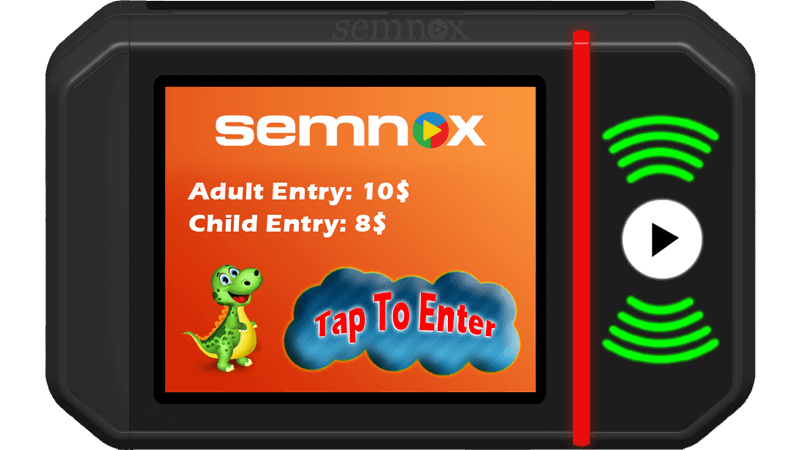
    Semnox, through its Parafait platform, offers a comprehensive arcade card system featuring one-tap debit card readers and advanced analytics. It supports diverse payment options and provides extensive customization for pricing and promotions.

    Key features:

    • One-tap contactless debit card readers
    • Detailed analytics and reporting dashboards
    • Flexible pricing models including time-play and bundled offers
    • Supports brand loyalty programs and guest tracking
    • High customization for branding and user experience

    Best for: Mid-to-large FECs needing robust analytics and flexible payment solutions.

    Wireless Debit Card Readers - Semnox

    3. Amusement Connect

    Amusement Connect provides smart RFID card readers that enable guests to tap reloadable cards for game play and prize redemption. The system emphasizes operational efficiency with cloud-based management and offline mode capabilities.

    AC’s SmartMech card reader as a smart RFID card reader system that allows guests to tap reloadable cards to play arcade games and redeem prizes. Key features include RFID card tap-to-play functionality, an offline mode to prevent lost revenue during network outages, cloud management for remote pricing and game configuration, customizable LED displays and messaging, and integration with party packages and bundled offers. The system also offers an API and supports integrations, making it a reliable RFID card solution with strong uptime and remote management, ideal for family entertainment centers seeking operational efficiency.

    Amusement Connect card readers

    Key features:

    • RFID card tap-to-play functionality
    • Offline mode to prevent lost revenue during network outages
    • Cloud management for remote pricing and game configuration
    • Customizable LED displays and messaging
    • Integration with party packages and bundled offers
    • Has an API and open to integrations.

    Best for: FECs seeking reliable game play RFID card solutions with strong uptime and remote management.

    4. Intercard

    Intercard is a longstanding player in arcade card systems, known for reliable hardware and real-time reporting. Their solutions support multiple payment types and offer multi-site management capabilities.

    Key features:

    • Support for magnetic stripe and RFID cards
    • Real-time data and player tracking
    • Multi-location management and reporting
    • Integration with loyalty and membership programs
    • Durable hardware designed for high-traffic venues

    Best for: Large operators and multi-site FECs requiring enterprise-grade features.

    5. Sacoa

    Sacoa is a globally popular arcade card system offering time-play options, bonus credits, and comprehensive reporting. Their equipment is built for durability and ease of use in busy entertainment venues.

    Key features:

    • Time-based play and bonus credit features
    • Detailed reporting and analytics
    • Supports mag-stripe and RFID cards
    • Integration with loyalty and promotional programs
    • Proven reliability in amusement and leisure industries

    Best for: Venues looking for a trusted, full-featured card system with strong support.

    6. Embed

    Embed is considered the gold standard for arcade card readers, providing user-friendly administration tools and extensive management capabilities. Their systems support a wide range of payment options and offer seamless integration with existing arcade machines. Embed is used at Dave and Busters which tends to take up a good portion of their time.

    Key features:

    • Flexible card design and kiosk options
    • Comprehensive real-time reporting and analytics
    • Multi-site and franchise support
    • Supports both mag-stripe and RFID cards
    • Easy integration with coin doors and pulse protocols

    Best for: Large FEC chains and operators wanting proven reliability and advanced management tools.


    Each of these top vendors offers solutions that can significantly enhance operational efficiency, improve guest experience, and boost arcade revenue through cashless transactions. When choosing the best card reader for your arcade, consider your venue size, guest preferences, and integration needs to find the system that fits your business goals.

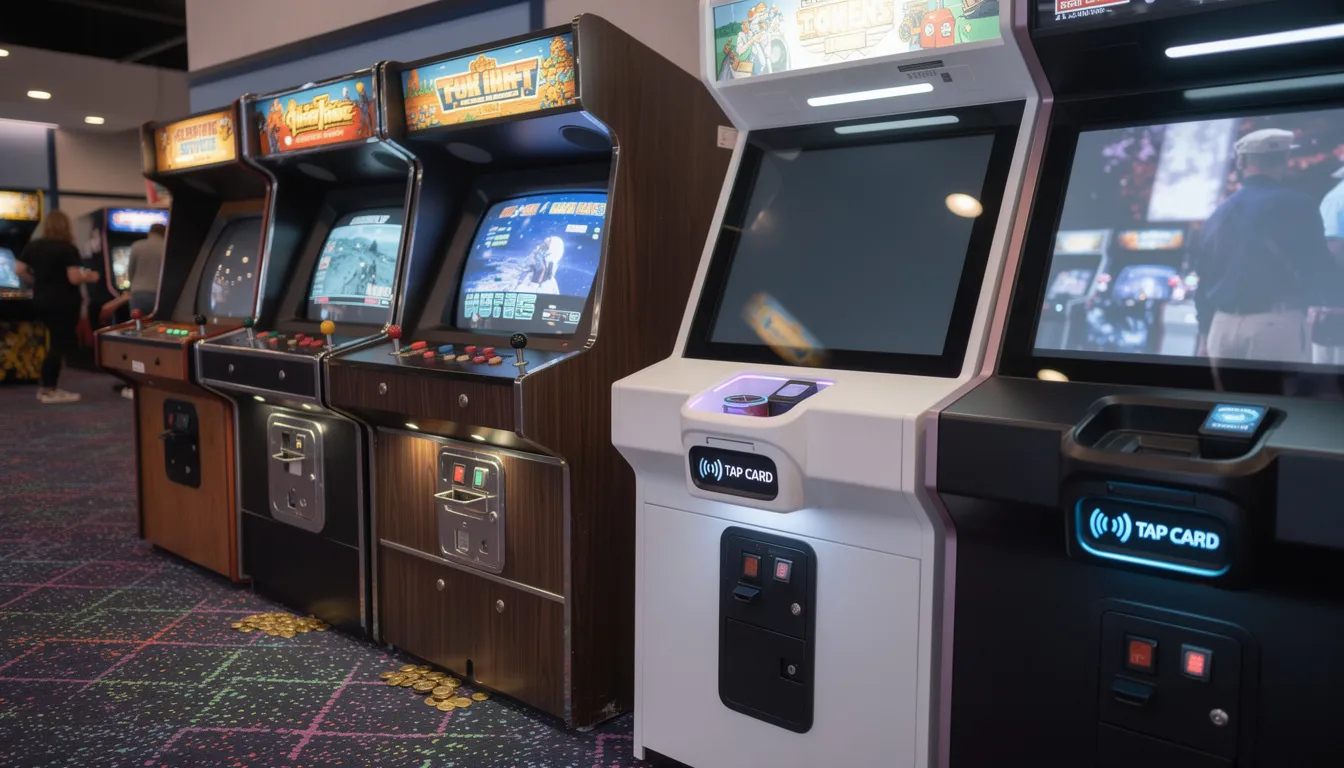
    The image features a nostalgic collection of vintage arcade cabinets with token slots alongside modern arcade games equipped with card readers, showcasing a seamless integration of traditional and contemporary gaming experiences. This setup highlights the evolution of arcade games, offering various payment options, including tokens and RFID cards, enhancing the guest experience in entertainment venues.

    Key Features to Compare When Choosing a Card or QR Reader

    Hardware choice should follow a clear feature checklist, not just brand recognition. Here’s what to evaluate:

    FeatureWhat to Look For
    Payment typesCards, RFID, QR, mobile wallets, membership IDs
    Offline capabilityWhat happens when the network is down?
    Reporting & analyticsDepth of data, real-time dashboards, export formats
    Integration optionsBooking systems, POS, loyalty software, AI tools
    Guest experienceEase of loading/reloading, clarity of on-reader messages
    Cost structureHardware, software licenses, transaction fees, support contracts
    ScalabilitySupport for second locations, franchise models, new attractions

    Additional points to consider:

    • Compatibility with your existing cabinets and pulse protocols
    • Demo availability to test the system before full purchase
    • Quality of customer support and response times
    • Network requirements for your location

    Build a comparison spreadsheet and score each system on these dimensions before making a decision. The right equipment choice affects profits for years to come.

    Implementing a New Card or QR System in Your Arcade

    Rolling out a new card system requires planning beyond just buying readers. Here’s a high-level roadmap:

    Pre-installation steps:

    • Conduct a floor audit of all games, attractions, and existing wiring
    • Choose between full conversion vs. phased migration by zone or game type
    • Plan downtime windows for installation and testing
    • Review compatibility with your current machines and coin doors

    Operational setup:

    • Configure game pricing, bonuses, time-play products, and party packages
    • Set up staff permissions, comp rules, and procedures for refunds and disputes
    • Connect to POS, online booking, or membership platforms where possible
    • Establish procedures for handling guests who lose their card or have balance issues

    Guest communication:

    • Use signage, social media, and website updates to explain the new system
    • Offer launch promos (e.g., bonus credits on first QR or card load) to drive adoption
    • Train staff to answer common questions about how the card and payment system operates
    • Consider customers who may need extra help, especially families with young children

    Measuring success:

    • Track changes in average spend per guest and plays per visit
    • Monitor labor time saved from eliminating coin collection
    • Compare revenue and ticket payout patterns pre- and post-implementation
    • Review data on game play patterns to optimize your floor layout
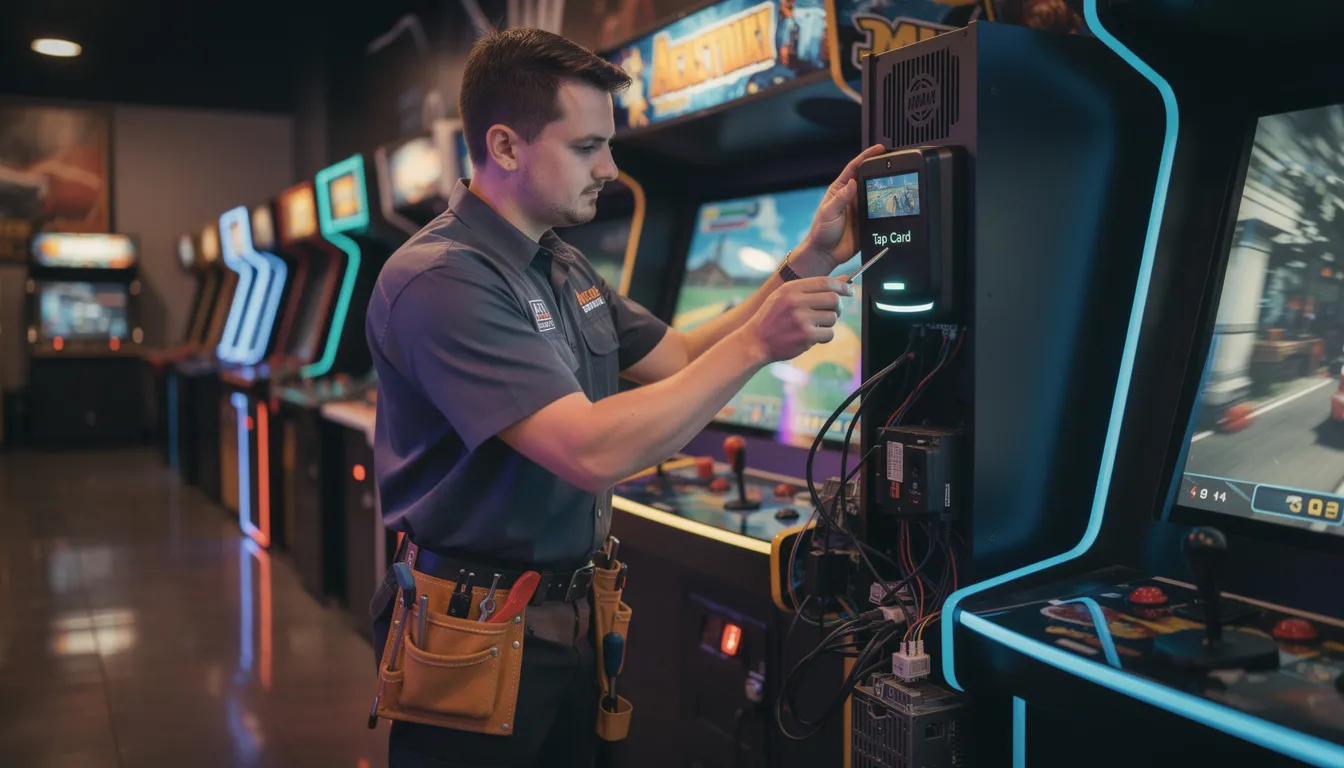
    An arcade technician is installing a card reader on a game cabinet, ensuring seamless integration for cashless transactions and enhancing the guest experience. The technician is focused on optimizing the arcade's operational efficiency by upgrading the payment options for players.

    Why Arcade Integrations Cares About Your Card Reader Choice

    Arcade Integrations is an industry blog focused on helping FEC owners connect their businesses through better software and integrations. We review the tools that actually matter for operational efficiency and revenue growth.

    Our goal is to help you:

    • Choose technology that ties into modern software stacks
    • Avoid getting locked into systems that do not integrate with AI, CRM, or marketing tools
    • Make decisions based on real-world case studies, not just vendor pitches

    What we regularly review:

    • Card and QR payment systems for arcades
    • Attraction management software
    • Merchant accounts and payment routing options for venues
    • Integrating FEC systems to make the day to day easier

    The right card reader isn’t just about accepting money—it’s about gaining control over your data, improving the player experience, and building a business model that scales.

    We encourage operators to evaluate FECFin’s QR code reader alongside other solutions and choose the mix that best fits your floor, guest profile, and growth plans. Whether you operate a small barcade or a multi-location FEC empire, the goal is the same: make it easy for customers to spend money and easy for you to manage the business.

    Ready to dig deeper? Explore our other reviews on software integrations, AI-driven marketing, and cashless transactions that actually move the needle for arcade operators.